Društvo
Saslušano dvoje oštećenih u istrazi protiv policajaca osumnjičenih za zlostavljanje
19. novembar 19:37



18. novembar 2026 18:22
podeli vest

Foto: Shutterstock.com/Aliaksandr Antanovich, ilustracija
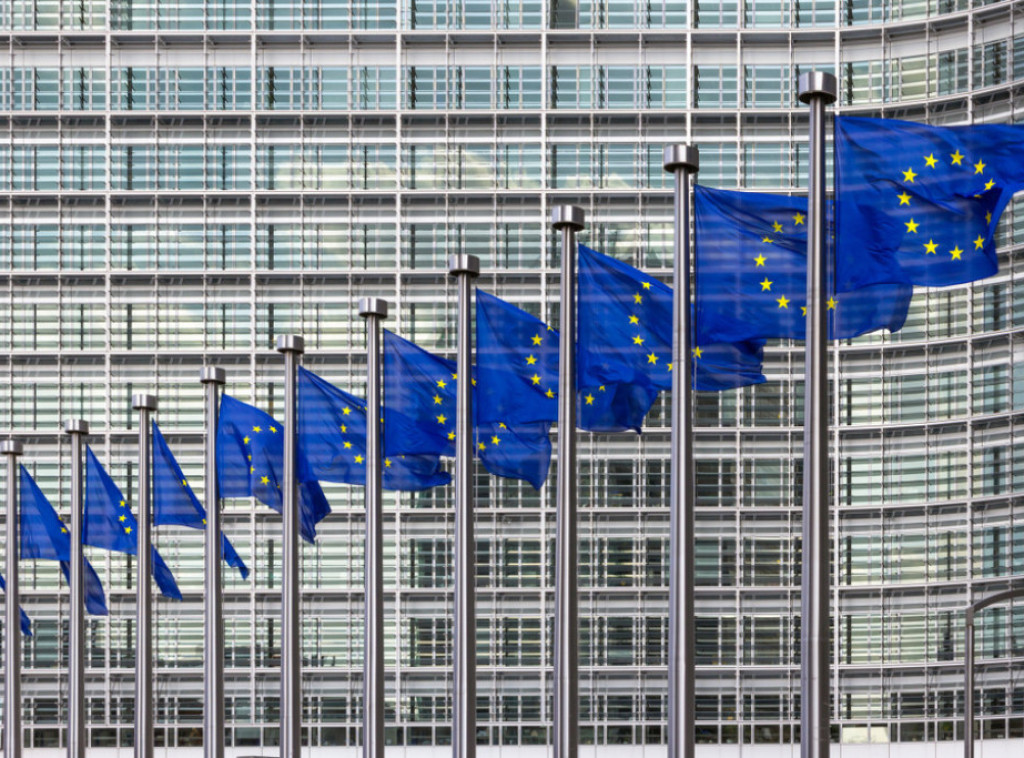
BRUSSELS - The European Commission expects Serbian economic growth to accelerate from 2.1 pct in 2025 to 3.3 pct in 2026 and 3.8 pct in 2027 before slowing to 2.9 pct in 2028, according to the EC's latest European Economic Forecast for Autumn 2026.
"Economic growth is projected to strengthen in the short term, driven mainly by domestic demand, before moderating later in the forecast horizon. After slowing to 2.1 pct in 2025, GDP growth accelerated to 3.5 pct in the first half of 2026. This was supported mainly by strong private consumption, underpinned by rapid growth in wages, minimum wages and social transfers, household credit expansion of about 20 pct y-o-y, and slightly improving consumer confidence," the report said.
"Looking ahead, short-term indicators point to a continuation of this consumption-led growth pattern. Retail trade is expected to support growth, while most industrial sectors continue facing unfavourable global conditions. Household income is expected to be further boosted by the supplementary budget adopted in September, which provides significant one-off fiscal transfers to households in the second part of 2026," it said.
"The economic effects of these transfers are set to carry over into 2027. Overall, GDP growth is forecast to reach 3.3 pct in 2026. In 2027, growth is expected to rise further to 3.8 pct, supported additionally by increased tourist inflows linked to the specialised EXPO 2027 in Belgrade," it said.
"In 2028, as these temporary stimulus factors fade, growth is forecast to slow to 2.9 pct, despite an assumed stabilisation in the global economic environment. In the short term, upside risks to the GDP prevail from strong momentum in private consumption. However, the outlook is subject to downside risks in the medium term, as the current state-administrated stimulus factors are inherently temporary and their unwinding could cool domestic demand more substantially than assumed. Structurally, rapid wage growth and the decline in foreign direct investment since 2025 could weaken external competitiveness and weigh on export performance," it said.
"In the first half of 2026, Serbia’s economy performed stronger than expected, driven by domestic demand. Real GDP growth is forecast to rise from 2.1 pct in 2025 to 3.3 pct in 2026 and 3.8 pct in 2027, underpinned by household consumption and boosted by the specialised EXPO 2027 in Belgrade. These factors are also expected to add to inflationary pressures," it also said.
"As broad-based support to domestic demand fades in 2028, growth is projected to moderate to 2.9 pct, even if the external environment stabilises as assumed. The fiscal deficit is set to reach 3.5 pct of GDP in 2026, reflecting a pre-election stimulus of around 1 pct of GDP and a cut to fuel excise duties. Thereafter, the deficit is projected to decline gradually to below 3 pct by 2028, while public debt is forecast to remain broadly stable at around 44 pct of GDP over the forecast horizon," it said.
"Inflation averaged only 2.7 pct between January and August 2026, contained by a good harvest for fruit and vegetables and substantial cuts to energy taxation. Inflation rose to 4.1 pct in September, reflecting base effects associated with the retail margin caps introduced a year earlier and higher global energy prices. For 2026, average inflation is forecast at 3.3 pct. However, core inflation, excluding energy and food, is significantly higher, reaching 4.5 pct around mid-2026, driven mainly by services prices. In 2027, inflation is projected to rise to 4.2 pct, as robust household demand is expected to offset the anticipated decline in global energy prices. By 2028, inflation is forecast to ease to 3.4 pct, assuming a continued decline in global fuel prices and some moderation in domestic demand," it said.
"The supplementary budget adopted in September 2026 increased expenditure by 1 bln euros (1 pct of GDP), mainly through transfers to households. This pushed the deficit to 3.5 pct of GDP in 2026, above the 3 pct fiscal ceiling. Strong projected economic growth and related tax revenue are expected to bring the deficit below the ceiling by 2027. It is expected to decline further to 2.7 pct by 2028, assuming a return to prudent fiscal policies," it said.
"Serbia’s public debt is forecast to moderate slightly from 44.2 pct of GDP in 2025 to 43.6 pct by 2028, as robust nominal GDP growth offsets the impact of the accumulation of fiscal deficits. However, downside risks persist, as the time-critical EXPO 2027 projects may be subject to unforeseen cost overruns," it also said.
19. novembar 19:37
19. novembar 19:12

19. novembar 18:56
19. novembar 18:52
19. novembar 13:50

19. novembar 12:32

19. novembar 10:12


19. novembar 08:11

19. novembar 19:34
19. novembar 19:27

19. novembar 19:12


19. novembar 18:52

19. novembar 10:19

18. novembar 18:48

18. novembar 17:08

15. novembar 13:50
19. novembar 19:34

19. novembar 19:27
19. novembar 19:12
19. novembar 18:27


19. novembar 14:53

19. novembar 12:18

19. novembar 16:28


19. novembar 15:09

19. novembar 15:00
8. novembar 08:12

1. novembar 09:15
25. oktobar 08:05
19. novembar 16:59

19. novembar 14:53

19. novembar 12:35
19. novembar 12:19
19. novembar 18:32

16. novembar 23:28

16. novembar 18:24