Politika
Nebojša Obrknežev: Pokušaj diverzije kod Kanjiže je bio udar i na Srbiju i na Mađarsku
7. april 09:48


21. januar 2026 18:15
podeli vest

Foto: Tanjug/video
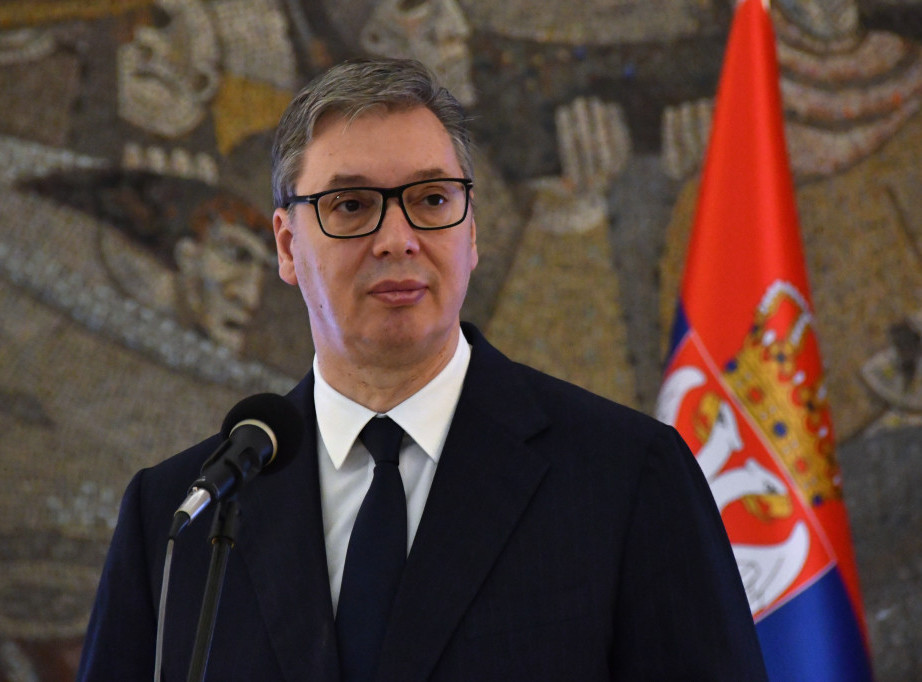
DAVOS - Serbian President Aleksandar Vucic said in Davos Wednesday was a good day for Serbia and for development of the Serbian economy, and noted that he had had substantially good meetings with EU Enlargement Commissioner Marta Kos, Swiss President Guy Parmelin, Czech PM Andrej Babis and European Bank for Reconstruction and Development (EBRD) President Odile Renaud-Basso.
Speaking to reporters, Vucic said the discussion with Kos had been successful.
"They, of course, have their requests, while we have our answers, but I think it was a really substantially good discussion and I believe that we can correct some of our mistakes in the period to come, and when we make commitments, we have to deliver on them," Vucic said. He said the commitments also had to do with public debates on certain laws, as well as consultations with the EU.
"Of course, we have our requests too, but I do not want to talk about that today," Vucic said, adding that the discussion with Kos had also addressed the geopolitical situation.
He announced that Parmelin would pay an important visit to Belgrade in April, and added that they had discussed further presence of Swiss companies in Serbia.
"For the first time, our trade with Switzerland has exceeded one billion euros, which is really not a small amount and we have a good reputation there, too. We are Switzerland's most stable and largest partner in the Balkans," Vucic said. He said the meeting with Parmelin had also addressed various spheres of social life, and added that Serbia needed the know-how of Swiss experts.
Vucic also said he had had an exceptional discussion with Babis.
"The fact Czechia has made a decision, and announced publicly today, that it will attend the EXPO is big news for our country. It is the 132nd country if I am not mistaken, or the 133rd one, so we will break all records in that regard," Vucic noted.
He said the discussion with Babis had addressed growing bilateral economic cooperation, as well as new investments and an agreement that would put Czechia on a higher pedestal when it comes to its cooperation with Serbia while also identifying Serbia as an exceptionally important partner of Czechia.
He said the discussion with Renaud-Basso had discussed the energy sector, and noted that he was not satisfied with Serbia's energy sector.
"Simply, I am not satisfied and I believe we can do much more, much more quickly and much better. We have faced countless sudden problems such as NIS and other things, but we have now succeeded in overcoming that and we must move forward at huge speed," Vucic said.
Vucic meets with Rubio, points out Serbia's positions on main geopolitical issues
DAVOS - Serbian President Aleksandar Vucic met with US Secretary of State Marco Rubio at the World Economic Forum (WEF) in Davos on Wednesday and pointed out Serbia's positions on the main geopolitical issues.
"A cordial brief meeting with Marco Rubio, with whom I exchanged views on the current global political developments and challenges, as well as on the topics of this year's WEF26," Vucic posted on Instagram.
He noted that he had pointed out Serbia's positions on the main geopolitical issues, and expressed the belief Serbia-US relations would continue to strengthen in areas of mutual interest as Serbia, in spite of being a small country, had an exceptional reputation as a consistent and dependable partner in a complex international context.
Before the meeting with Rubio, Vucic met with European Bank for Reconstruction and Development (EBRD) President Odile Renaud-Basso.
"As always, a substantial discussion with Odile Renaud-Basso about expediting the green energy transition, sustainable infrastructure and regional connectivity, as well as about strengthening the competitiveness of the private sector and accessibility of funding for companies bringing new jobs," Vucic wrote in a separate post.
He noted that they had also discussed the current European priorities, from energy security and grid modernisation to a digital transformation of the economy, especially SMEs.
6. april 15:08
6. april 13:57

6. april 13:16

6. april 11:57

6. april 11:02

7. april 04:55
6. april 21:57
6. april 20:33
6. april 17:00
6. april 16:46
3. april 18:17

6. april 11:39
3. april 18:42
2. april 16:38
9. mart 18:01
1. mart 09:00
22. februar 10:32
15. februar 09:00
25. novembar 17:40
24. novembar 14:51

23. novembar 17:21
23. novembar 15:59