upr@tanjug.rs +381 11 2621-090
spr@tanjug.rs +381 11 3287-401
sport@tanjug.rs +381 11 3287-511
knu@tanjug.rs +381 11 2186-729

TANJUG NEWS

Serbian National News Agency Tanjug releases about 400 news items every day on the most important political, economic, social, cultural and sports events in the country and abroad.

Tanjug's General News Service contains minute-to-minute reports and analyses from the scene - by agency journalists in Belgrade and the network of correspondents in the country, region or abroad.

In addition to reporters in the field, Tanjug's sources include major world news agencies: AP, Thompson Reuters, China's Xinhua, as well as the leading news agencies in the Balkans that Tanjug cooperates with within the Association of Balkan News Agencies - Southeast Europe (ABNA).

Furthermore, Tanjug also offers a "mini service", which is primarily targeted at smaller, local media and which includes the most important news items from the agency's services.

It is also possible to subscribe to individual services, since some clients may be interested only in culture-science-art, sport, today in history or daily announcements of events.

The clients receive news items in electronic form.


ekos@tanjug.rs +381 11 2621-151

TANJUG EKOS

Tanjug's economic information service publishes daily and periodic reports on general economic trends, monitors the situation in foreign and domestic financial and raw materials markets, and provides a detailed overview of the trade in goods, services and changes in the domain of intellectual property.

In addition to reporters in the field, Tanjug's sources include major world news agencies, the internet, professional journals and literature, specialized publications of the UN and other international organizations.

The service also offers information referring to specific areas - domestic economy, Serbia's economic cooperation with the world, global economy, ecology and tourism.

The market and numerical reports on industry, agriculture and finance make up a separate service.


internet@tanjug.rs +381 11 2636-089

TANJUG MULTIMEDIA

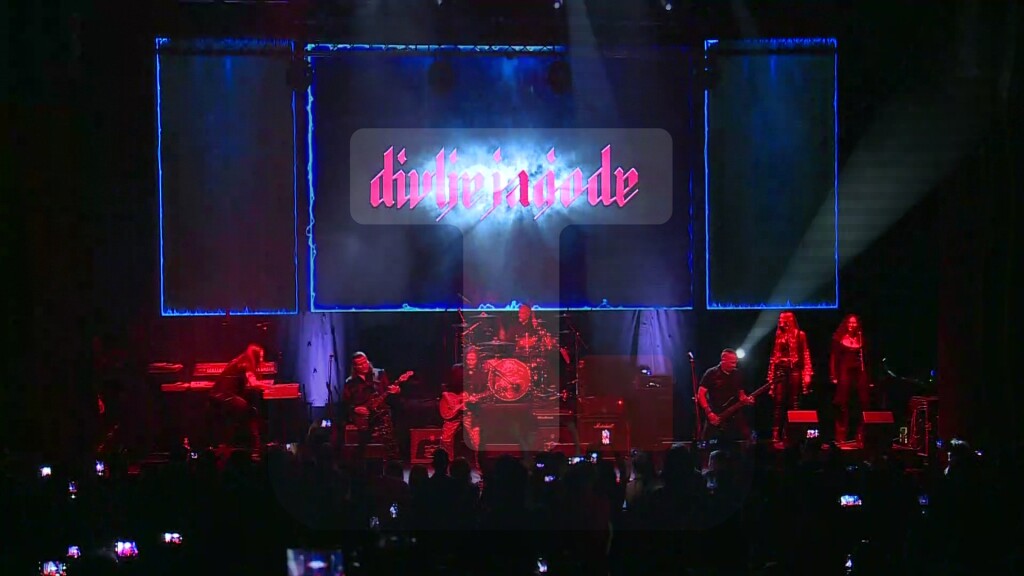
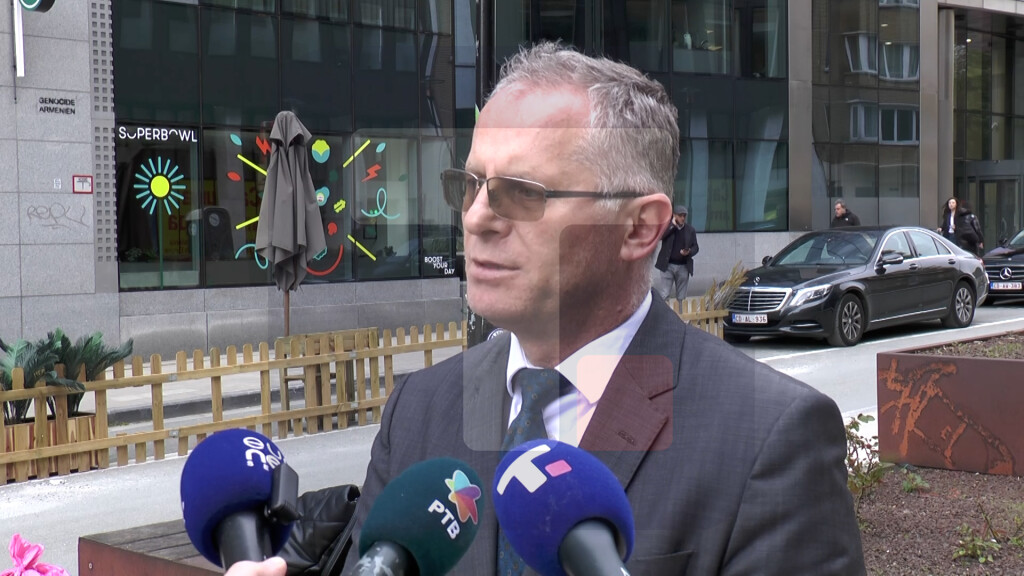
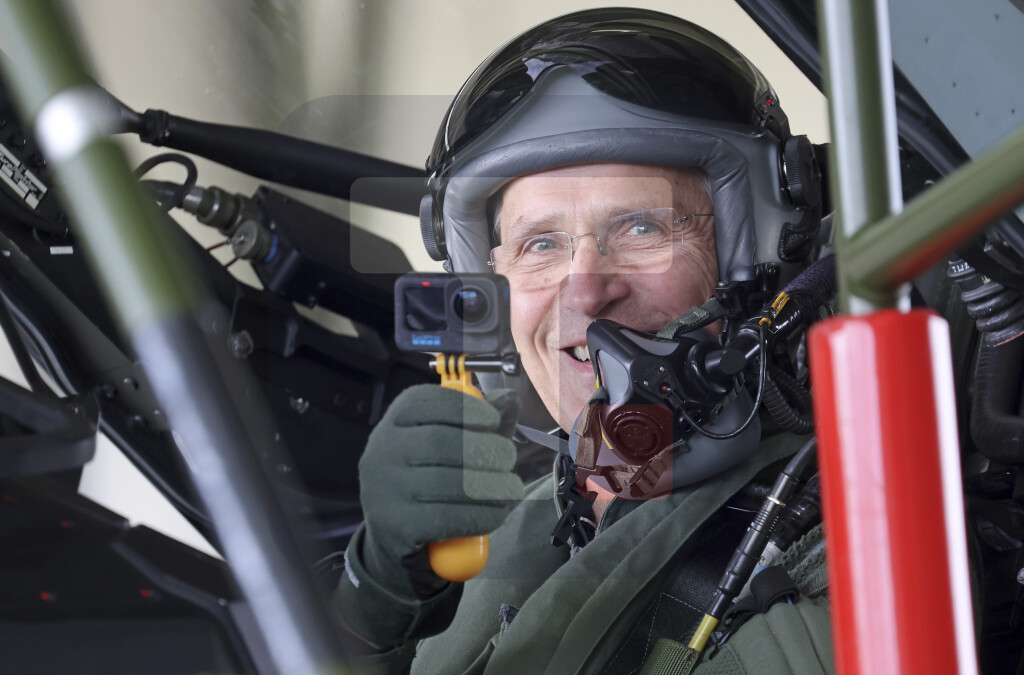
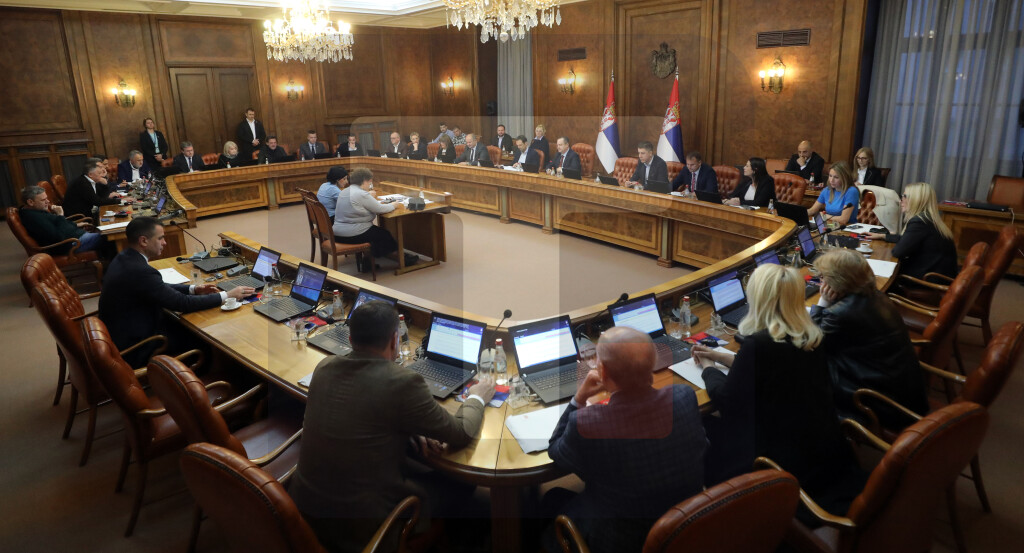
Tanjug multimedia publishes over 100 photographs, video and audio recordings from all major events in the country and the world on a daily basis.

The service also offers photographs obtained through interagency exchange.

The video clips and photographs can be downloaded only by registered subscribers.


englishservice@tanjug.rs +381 11 3282-953

TANJUG IN ENGLISH

Tanjug's English-language service offers a fine selection from Tanjug's General Service.

Daily News Bulletin is issued on workdays, and includes about 50 news items on the political, economic, cultural, sports and other interest events in the country and abroad. It also offers news, analysis and commentary  by leading world media and institutions. It is published in electronic form.


TANJUG'S ARCHIVES

The Tanjug Photo Archive contains 3.5 million negatives of the most important events in the former Yugoslavia, Serbia and world from World War II to this day.

The Tanjug Text Archive holds an extensive collection of texts released since the establishment of Tanjug to the present day.

HOW WE BEGAN

On November 5, 1943, the final liberation of Kiev started on the Eastern Front. Catholic priest Bernard Lichtenberg, one of the symbols of the German resistance to Nazism, died in captivity. Sam Shepard, famous American actor, playwright and director was born in Fort Sheridan, Illinois.

On November 5, 1943, there were five theaters and 17 cinemas in Belgrade. Star of the Belgrade Opera Zarko Cvejic performed live on the show "Love Dreams" on Radio Belgrade, and Colleague Crampton by Gerhard Hauptmann was playing at the National Theater in Belgrade (then called the Serbian National Theater).   

"This is the Telegraph Agency of the New Yugoslavia… Tanjug reporting, Tanjug reporting…" were the first words broadcast by the new-founded agency on November 5, 1943.

The original founding document has been lost; what remains are the recollections of those who had a hand in or witnessed the birth of the new agency.

"Tanjug's first task was to inform the world about everything that was happening at the Second Session of the Anti-Fascist Council of the People's Liberation of Yugoslavia (AVNOJ) through wireless broadcasts. Tanjug would then go on to organize its network across the country and grow into the Yugoslav national news agency," Mosa Pijade later recalled.

Historians recorded how Tanjug got its name - a six-letter acronym.

Many ideas were thrown around. Some wanted to call it the Telegraph Agency of the Free Yugoslavia (tasjug), others the News-Telegraph Agency of the New Yugoslavia (natasjug) and others yet the Telegraph Agency New Yugoslavia (tenanoj). There were many more suggestions, but the problem was that most acronyms, when spoken aloud, sounded either pro-Chinese or pro-Soviet.

Josip Broz Tito (President of the Socialist Federal Republic of Yugoslavia from 1953 to 1980) also had a hand in the christening. When Mosa Pijade told him the names in play, they gave Tito a good laugh.

"Why don't we call it cik-jank?" Tito joked, alluding to Mosa's nickname in the partisans - Cika Janko (Uncle Janko).

It was then that Mosa lighted upon an idea - the agency would be called Tanjug, short for the Telegraph Agency of the New Yugoslavia.

The name Yugoslavia has since become history, and what was once an acronym is now the full name of the national news agency of the Republic of Serbia.

The founding ceremony was caught on camera. A photo dated November 5, 1943 shows the agency's first staff: Mosa Pijade, Vladislav Ribnikar, Lepa Pijade, Olga Humo and Jara Ribnikar. Also in the picture are Ivo Lola Ribar, Vladimir Velebit and Ivan Ribar.


The first photograph of Tanjug's wartime staff was shot by Vili Simunov-Barba, who captured the moment with his Leica. He worked for Tanjug and fought in the war until he was killed in the German raid on Drvar on May 26, 1944. Another Tanjug employee was killed in the attack - radio telegraph operator Aleksandar Tepavcevic, nicknamed the Englishman for his excellent command of the language.

Tanjug's first director was Vladislav Ribnikar, one of a famous family of journalists that started the daily Politika on January 25, 1904. 

Tanjug started with a few typewriters, a small radio transmitter and an outdated copier. Initially, the news was written in Serbo-Croatian and English.

The young agency published a bulletin with a small circulation, but dated technology made its distribution difficult.

The first issue is dated November 10, 1943 and reads: "British Brigadier General MacLaine arrived in Serbia recently, as the Allied Powers Commander in the Middle East E.M. Wilson's envoy to the People's Liberation Army and Partisan Detachments of Yugoslavia (NOV and POJ). During his first visit, General MacLaine presented NOV and NOJ Commander-in-Chief Tito with a letter from Commander Wilson... "

Mosa Pijade later explained: "I would have to say that in the early days Tanjug primarilly worked for the foreign market, even though its mission was to inform both the domestic and the international public."

Tanjug's newsroom, originally based in Jajce, moved to Drvar, Vis, Bari and Valjevo and finally to Arandjelovac in 1944.

"We worked out of the attic of an unfinished house in Arandjelovac. Branko the messenger would bring us the material for our broadcasts. On that October 20th he ran, waiving a piece of paper. Through tears, he said: Belgrade is free. Tanjug's broadcast started. I said over and over: Belgrade is free, Belgrade is free… I was emotional. I knew it meant the end of the war," radio telegraph operator Ivo Segedin later recalled.

Tanjug's first offices in Belgrade were located at Resavska 28 (later General Zdanov Street), before the war home to the first national news agency Avala, founded in 1919 and shut down during the German occupation, as well as several newspapers. In the late 1960s, Tanjug moved to its current location at Obilicev venac 2.

The Tanjug building, known as Prizad, was designed by architect Bogdan Nestorovic (1905-1975). The six-story, semi-circular building went up in 1938 on a plot enclosed by three streets. It is an example of late modernism in Serbian architecture. During World War Two, the building served as the headquarters for the German Gestapo.

The agency has gone through different phases - in its heyday, it had 48 correspondents across the globe, was considered one of the top 10 agencies in the world and the leading agency in non-allied countries.

Tanjug was the first to report the Vietnamese liberation of Saigon (Ho Chi Min City) in 1975, the start of the Cuban invasion in 1961, and the Warsaw Pact invasion of Czechoslovakia in 1968. When Bobby Fischer became world chess champion in 1972 and when Nicolae Chausescu was overthrown in Romania in 1989, Tanjug had the news before anyone else.

Today, Tanjug's photo archives contain around 3.5 million photographs, many of them of great historic value.

Among them is a famous photo taken during the Second Session of AVNOJ, when foundations were laid for the "second" Yugoslavia. There is also an image shot during the raid on Drvar, which shows Tito and Aleksandar Rankovic standing at the entrance to a cave which served as the headquarters for the Yugoslav forces.

When Tanjug moved to Belgrade, its first professional photo journalist Rista Marjanovic paved the way for what would later become Tanjug's photo department.

Marjanovic had been a photographer since World War One. It was thanks to him that the world learned about the exploits of the Serbian army in the war against Austria-Hungary, and the retreat of the foreign soldiers across Albania, Corfu, Thessaloniki to their homeland. Between the two wars, he worked for the Avala news agency, and during the German occupation he secretly documented life in occupied Belgrade. His photos preserve an invaluable record of a Belgrade in ruins - city blocks in flames, torn down bridges and the wartime suffering of the people in the Yugoslav capital.

"Uncle Rista, as everyone in Tanjug called him, shot everything in secret, sometimes putting his own life at risk. The German authorities did not allow the taking of photos. But he did not give in. He would carry his camera in a peasant's bag and wear tattered farm worker's clothes, so as not to attract the Germans' attention. He would take out the camera undetected and capture the events of an unfortunate time," recalled Tanjug's photojournalists who were lucky enough to learn the trade from Rista.

When the partisans and the Soviets entered Belgrade in 1944, he took his camera out of the peasant's bag. He was finally free to shoot openly.

His wandering "third eye" - as he referred to his camera - finally settled down in Tanjug when the agency moved to Resavska Street. Before he retired, he organized the agency's photo archives and until the very end generously shared his knowledge and experience with the generations that would follow in his footsteps. Among his successors were Hristifor Nastasic, Branko Obradovic, Anton Vas, Zivorad Vucic and many others.

News agencies work around the clock: day and night, weekends, holidays, even New Year's. Different time zones must be considered - when Europe is going to sleep, America is hard at work. The work day in Asia is ending just as Europeans are arriving at their offices.

"Nothing important happened in the world last night. It seems the only ones working were clocks and on-call reporters," Tanjug's night editor once wrote in his report.

Being an agency journalist is at the same time a great professional challenge, a gift and a curse. This job, more than most, requires complete dedication for 24 hours of every single day. Unlike their newspaper colleagues, agency reporters cannot take a breather and expect somebody else to cover an event for them.

This can best be seen in an anecdote that has been retold for decades.

When a well-known Yugoslav football player ran into a Tanjug reporter at a reception organized after a match against the Soviet Union, he started looking at him from all angles as if he had seen an alien. "I couldn't wait to meet you. Tell me, how do you manage to call in, on the same day, at the same time, from New York, London, Cairo, Belgrade…," the national team goalkeeper asked the journalist.

Among Tanjug's former employees are renowned journalists whose articles were picked up by foreign newspapers and whose names are remembered beyond Yugoslav borders: Branko Bogunovic, Momcilo Pudar, Mihailo Saranovic, Mirko Aksentijevic, Milos Corovic, Bozidar Kazic, Borislav Lalic, Jovan Vavic and many more.

Many learned the ropes at the agency and went on to brilliant careers elsewhere: Frane Barbijeri, Bozidar Radenkovic, Malisa Marovic, Dejan Lukic…

For some, journalism was just the springboard. The first head of Tanjug's Montenegro office, Mihailo Lalic, wrote several novels, Vinko Vinterhalter is a well-known historian, while Lazar Mojsov, Zdravko Pecar, Slobodan Casule, Ivo Vajgl and Vuk Draskovic built successful careers as diplomats.    

Other names remembered in the former Yugoslavia also worked for Tanjug: Vladislav and Jara Ribnikar, Vladimir Dedijer, Milorad Panic-Surep, Leo Mates…

Today, Tanjug is a modern news agency which broadcasts around 400 pieces of information and over 100 photographs, video and audio recordings every day.

Tanjug is the only Serbian agency in the EANA (the European Alliance of News Agencies). It is a member of AMAN (the Alliance of Mediterranean News Agencies), ABNA (the Association of the Balkan News Agencies), and BSANNA (the Black Sea Association of National News Agencies).


Vojislav Lalić
Nebojša Berec


Novi magazin