Društvo
Sanja Panić: Novi pasoši po svim svetskim standardima, cena izdavanja ostala ista
3. jul 19:14


3. jul 2026 19:01
podeli vest

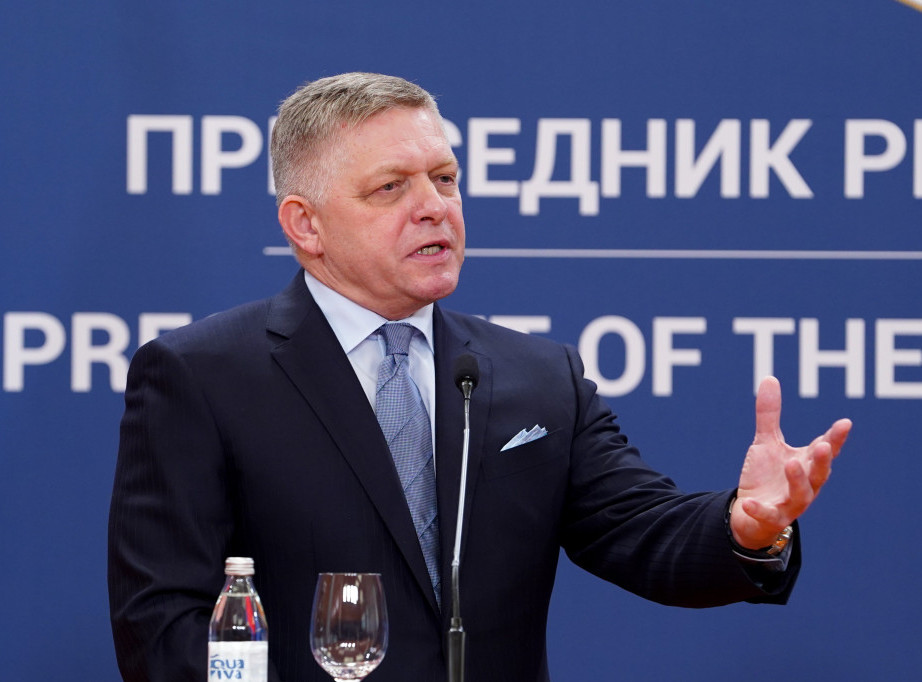
Foto: TANJUG/STR
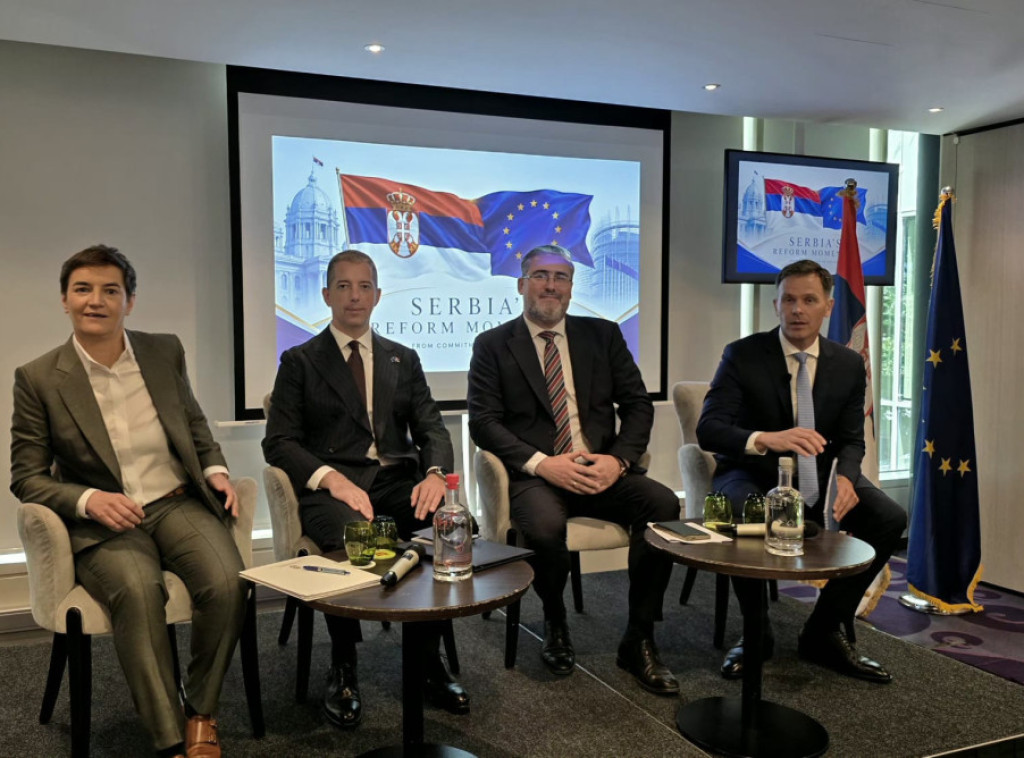
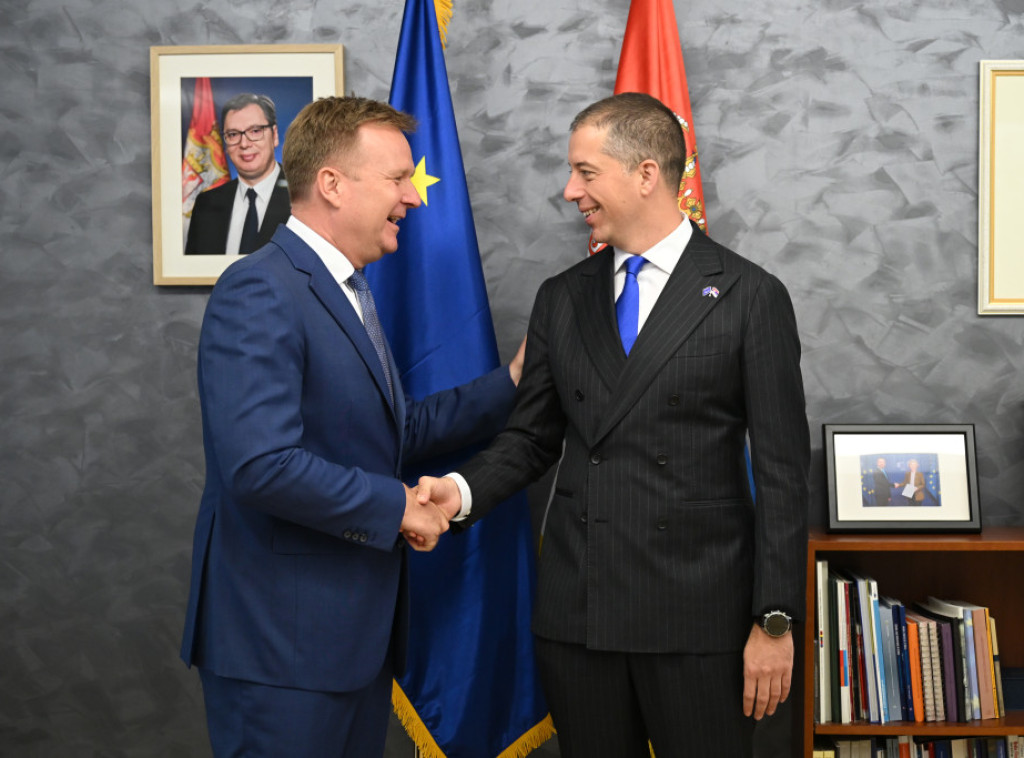
BRUSSELS - Serbian FM Marko Djuric said on Friday in Brussels Serbia was doubling down on its EU path and that it was also committed to maintaining peace in the region and cherishing good relations and cooperation with its neighbours.
"Serbia is doubling down on its EU accession path. Serbia is doubling down on its road to Europe. And this is actually the focal point of our foreign policy. So Serbia's foreign policy has become increasingly pro-European, increasingly Euro-centric over the past couple of years. And this is not by chance. This is a result of our overall understanding of where things are going in the world," Djuric told a conference titled Serbia's Reform Momentum: From Commitment to Delivery.
"We are acutely aware that we are witnessing an unparalleled, unprecedented situation in which Europe and the world are faced with multiple challenges, which includes an equivalent to the new industrial revolution, which is the ascent of AI, which includes the ascent of social media, which is the equivalent of the invention of the printing press a while ago. It's also something that deals with basically a complete makeover and change of the global geopolitical order, with challenges that sadly already affect very much our continent.
In this environment, Serbia has no dilemma. So I want to state here unequivocally that Serbia sees Europe as its future. And in that respect, we are trying to give our small contribution.
Serbia is a country that has eight neighbours on its immediate borders, which makes us, in a way, central to stability in our part of Europe. Actually, I believe that after Germany, which has nine neighbours, together with Austria, we are a country with the biggest number of neighbours in Europe, which means that how we get along with our neighbours actually has a big impact on stability. So one of the key dividends of bringing Serbia into Europe is actually greater stability, ending the Achilles's heel of Europe, which exists, and sadly has existed in the Balkans for many, many years," Djuric said.
"In practical terms, we are working on reconciliation, on improving relations with some of our neighbours. Just a couple of days ago, I hosted my dear colleague and friend, Gordan Grlic Radman, the Croatian foreign minister, in Subotica, for substantive talks on, A: resolving outstanding issues from the past, B: creating new horizons, new opportunities in our bilateral relationship with Croatia. I want to be very honest with you. It's not without challenges. It's not without headwinds. It's not always overly popular. But we do have the support of our president. We do have the support of our people, I believe, very strongly, in pursuing such course. Speaking about the situation in our immediate region, I often take a lot of pride in what we were able to accomplish with our Hungarian neighbours to the north," he noted."
"If you just look at how our relationship with Hungary used to unfold over the 20th century, it would hardly be possible to imagine that today, regardless of who is in power in Serbia or in Hungary, we are one of the closest friends and partners and neighbours. Over the past decade and a half, we were able to completely change the paradigm of our relationship. From countries that were on opposing sides in both world wars and during the Cold War, we've accomplished a strategic partnership, which is a true European example," he said.
Speaking about the situation in Bosnia and Herzegovina, Djuric said:
"We are supportive of the Dayton Peace Agreement. Of course, we are supportive of Republika Srpska. But we are supportive of peace. We are supportive of maintaining the structure, which has been so instrumental for preserving functional relations there."
"I want to say that we are also working to resolve the outstanding issues in the Belgrade-Pristina dialogue. I just had a very productive meeting this morning with the EUSR (EU Special Representative) Mr (Peter) Sorensen. And Serbia is constructively engaging to make sure that we retain stability in one of the most neurologic spots in Europe. What this means in practical terms is that, with the support of the president and the government, the Serbs have taken part in recent local and parliamentary elections. We've seen the gradual return of the Serb community into the institutional system, the election of mayors in Serb-majority municipalities.
And we will see, in the coming days and weeks, further steps to, on our side, extend the hand of cooperation. Because what we see is not a region of borders, divisions, conflicts. What we see is a region of opportunities and cooperation," Djuric said.
"That's why our president, together with the Albanian prime minister, has proposed a bold new step to have the entire region join the Schengen area and the single European market. What kind of a message is this, you may wonder? Well, it's a message that we do understand the constraints and the concerns that exist in Europe about the complexity of the decision-making process.
And we have agreed and prepared ourselves to not ask to have a commissioner in the European Commission immediately, or to have, let's say, a vote immediately. This doesn't mean that we see ourselves as a second-grade member. But this means that we understand that the accession process is a two-way street and that we are not perfect. No one is perfect. But having the region, having Serbia and other countries in the region, join the single market would actually unlock 50 billion euros annually of new economic value generated. It would mean diffusing, actually, all the negative and stereotypical ethno-nationalist agendas that have plagued the region for so long. Having the region in the Schengen area would mean basically completely diffusing the ethno-nationalist and divisive agendas.
It would mean enabling all the Serbs, Albanians, Bosniaks, everyone in the region to circulate freely. At the same time, it would reduce the size of the outside border of the Schengen area by 20 percent, unlocking immense potential to redeploy security elsewhere where it's needed," Djuric said.
"Serbia is one of the biggest contributors to Frontex activities and has seriously helped in reducing the flow of illegal migrants into Europe, which is very important. By the way, we've done so in a very humane way. So my point is there are just 19 entry points into our region, 19 border crossings at international airports, seaports into the Western Balkans region out of 1,800 roughly in the broader Schengen area. And can you imagine, just 19 additional entry points would mean complete makeover of the outside border of the European Union," he said.
"I want to say that there's an additional benefit in bringing Serbia on board in Europe. Serbia has maintained a long tradition of relations with countries beyond our horizons, beyond Europe. In December, we hosted in Serbia a conference of 44 African states at the level of minister or national security adviser who all came to discuss with us how to expand and expand cooperation between Serbia and the region and the African continent. This is because Belgrade was the seat of the Non-Aligned Movement at the time it was established in 1961.
So we do contribute by excellent relations with regions beyond ours, and definitely not the least on Ukraine. I don't want to not mention this.
Serbia is not ambiguous on this topic, to say the least. We have supported Ukraine on each and every step at the United Nations. We have provided, as you have seen in this video, more than 90 per cent of all aid coming from our region," Djuric said.
Addressing the conference, Serbian Parliament Speaker Ana Brnabic said Serbia was committed to reforms that would bring it closer to the EU and that the national parliament had this year passed 23 laws that were directly related to EU integration, including 14 that were directly related to implementation of the EU acquis or the Growth Plan.
Serbian First Deputy PM and Finance Minister Sinisa Mali said Serbia was the largest and the fastest-growing economy in the Western Balkans and noted that, economically, the country was already a part of the EU as it was well integrated into European supply chains.
Minister of European Integration Nemanja Starovic said Serbia was carrying out a reform agenda adopted in 2024 and continued to work with commitment on the EU path while facing the most demanding recommendations and negotiations both technically and in terms of procedures.

Galerija
3. jul 19:14
3. jul 18:27
3. jul 18:14
3. jul 14:53
3. jul 14:09

3. jul 13:42


3. jul 12:03

3. jul 16:01

3. jul 09:29
3. jul 08:57
3. jul 06:51
25. maj 15:25
9. mart 18:01
1. mart 09:00
22. februar 10:32

3. jul 12:00

3. jul 09:05
2. jul 23:17