
12. februar 2026 13:33
NBS keeps key policy rate at 5.75 pct
podeli vest

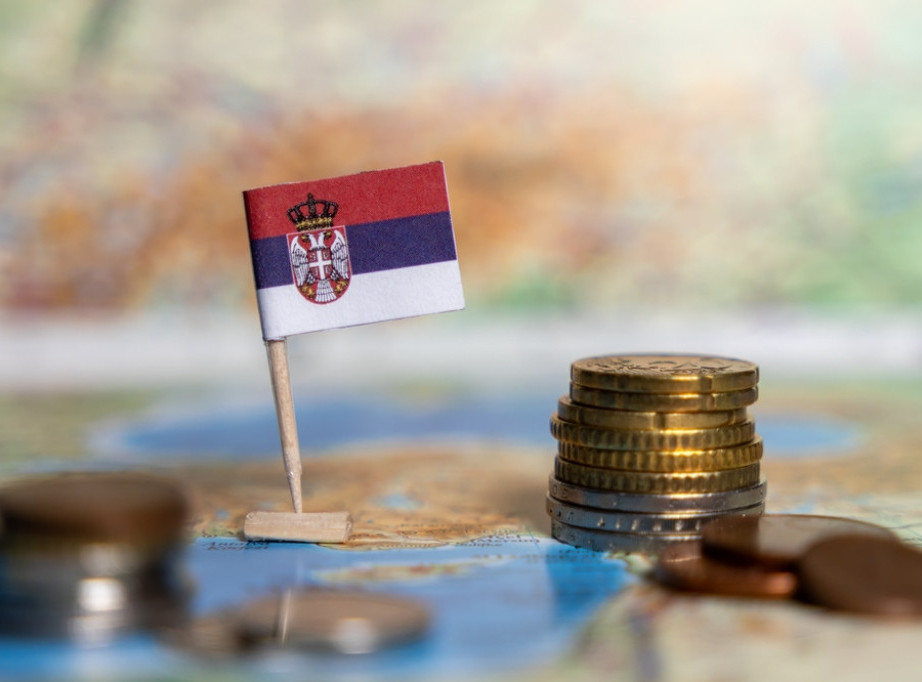
Foto: Shutterstock.com/Milan Petrovics, ilustraacija
BELGRADE - The National Bank of Serbia (NBS) Executive Board decided on Thursday to keep the key policy rate at 5.75 pct, as well as to keep the deposit facility and lending facility rates unchanged at 4.5 and 7.0 pct, respectively, the NBS said.
"The Board made the decision primarily in view of actual and expected inflation, as well as factors from the domestic and international environment affecting its movements," the central bank said in a statement.
"Consistent with the Board’s expectations, in Q4 2025 y-o-y inflation remained slightly below the midpoint, falling to 2.7 pct in December. Such inflation movement was largely driven by the application of the Decree on Special Conditions for Trade in Certain Types of Goods – which caps wholesale and retail trade margins. Inflation is expected to continue moving within the 3±1.5 pct target tolerance band even after the expiry of the Decree, until end-2026 and in the medium run. This should be facilitated by a cautious monetary policy, the announced adoption of systemic laws that will curb unfair merchant practices, as well as by the easing of cost-push pressures from the international environment, low imported inflation, and the onset of a new agricultural season, assuming that it turns out better than last year’s. The increase in disposable income – mainly due to wage growth – and the low base from September 2025 (when the Decree came into effect) will work in the opposite direction. However, we do not anticipate any major inflationary pressures from wage growth as it will be accompanied by gains in productivity. Furthermore, the NBS measures to stimulate lending to lower-income citizens are calibrated to avoid excessive credit growth, which could negatively affect price and financial stability.
The Executive Board underlines that it will continue to pursue a cautious monetary policy, primarily due to the still heightened global uncertainty fuelled by geopolitical tensions and protectionism, which considerably affect commodity and financial markets, as well as investment and consumer confidence. For these reasons, higher volatility of global prices of energy and other primary commodities has been recorded over the past month, and the same holds true for precious metals prices and inter-currency relations. At the same time, rising protectionism could negatively affect the production and exports of the domestic manufacturing industry. As for monetary policy decisions of leading central banks, the Fed’s projections released after the December meeting suggest that a continued lowering of the federal funds rate range is likely going forward, while the ECB will probably keep its key rates on hold for a while, as the inflation target is assessed to have been attained.
Economic activity in Serbia faced significant challenges last year. The reduced volume of production at NIS (Oil Industry of Serbia) following the enforcement of sanctions prevented a more substantial acceleration of economic growth in the final quarter. As a result, according to the SORS estimate, GDP growth amounted to 2.0 pct in 2025. The Executive Board expects economic growth to pick up this year and next, receiving a positive contribution from both consumption and fixed investment. This should be supported by the implementation of investments planned under the Leap into the Future – Serbia Expo 2027 programme, while in 2027 net exports are also expected to make a positive contribution due to the hosting of the specialised Expo exhibition.
The Executive Board will continue to follow and analyse developments in the domestic and international markets and make monetary policy decisions on a meeting-to-meeting basis depending on the incoming data, the outlook for inflation and its key factors, and the assessment of the effects of past monetary policy measures. In making its decisions, the Board will remain mindful of the preservation of financial stability and a favourable growth outlook," the NBS also said.